A metabiography: narrative and interview
Metabiography
A journey through the life and work of Sandro Visca. The narrative intertwines with the artist’s own voice, covering everything from his early drawings to his experiences in theatre, the mountains, and the studio.
In the narrative
Childhood and the discovery of art
Sandro Visca is undoubtedly one of the most interesting contemporary Italian artists working within the realm of the fantastic. He was born in L’Aquila on September 19, 1944, and spent his childhood in a house just outside the medieval city walls, displaying a marked aptitude for drawing from an early age.
[«It was there that I first discovered the architecture of a flower and realized that a kite—beyond its aesthetic appeal—could only fly thanks to careful design. It was primarily through direct, close contact with nature and through childhood games that I began to feel the need to express everything within me that was turning into emotion. Later, a secret instinct guided me toward forms, colours, marks, materials, and construction.»]
A sensibility that, in the years immediately following, began to reveal itself as a genuine love for art.
[«In 1950, during the post-war period, I was in second grade and already busy creating drawings that featured distinct perspective lines. This delighted my teacher, who was passionate about painting and never stinted on praise to encourage me to improve. She once took us to visit an exhibition of works by Teofilo Patini (1840–1906) held at the Teatro Comunale in L’Aquila, right across from our school, the ‘De Amicis’»]. I remember being deeply impressed by those works inspired by the theme of peasant life in Abruzzo (it was only in adulthood that I came to understand the excessive, declamatory rhetoric they embodied).
I was just a child then, and those massive paintings—which I had often heard my family speak of—seemed even larger to me than they actually were. I stood so spellbound before them that when we were called back to school, I remained rooted to the spot, gazing at the works—partly out of distraction, but also swept up in the emotion and eager to understand how they had been painted; it was only when I found myself enveloped in total silence that I realized I had been left behind. On my way back, I got lost in the theatre’s labyrinthine spaces and, breathless and flustered, finally managed to make it back to the school entrance—clearly late. For this, I was severely reprimanded»].
In 1951, at the age of seven, he received his first accolade, winning a regional competition organized by his school.
[«During those years, my aptitude for drawing led to my selection for a drawing competition. It was a proper contest: no reference books were allowed for copying, the paper was officially stamped by the judges, and speaking to the students at neighboring desks was strictly forbidden. It was the occasion on which I won my first prize with a piece titled The Nightingale. That success gave me a major boost in confidence regarding my own abilities»].
Alongside his schoolwork, Visca independently created his first paintings as a self-taught artist.
[«After much persistence, I finally received my first set of oil paints as a birthday gift when I was eight years old. However, not knowing how to thin them, I decided to use the olive oil my mother kept in the kitchen as a solvent; the result was that the small pictures I painted on plywood panels never dried, and consequently, they couldn’t be touched even months later because the paint remained perpetually wet.»]
After finishing middle school, he felt strongly drawn to an art-focused school but faced significant family opposition—which was, however, eventually overcome.
[«In those years, L’Aquila was a deeply provincial city; despite being the regional capital, it still lacked an art-focused school. The Municipal Art School was established only in 1955, but it lacked legal accreditation; consequently, my parents refused to let me enroll, as they were adamant that I attend a state-run school. I tried to persuade them to send me to the Liceo Artistico (Art High School) in Pescara, but I failed. Thus, against my wishes, I was enrolled in the Technical Institute for Surveyors—a program that did include some drawing, though strictly of a technical nature. Fortunately, two years later, the Municipal Art School was transformed into a State Art School—a branch of the Rome institute—and I was able to switch my field of study.»]
Naturally, given his aptitudes, he is enthusiastic about attending such a school.
[«The Art School paved the way for my first experiences in the world that truly interested me; above all, it opened my eyes to the various aspects of representational technologies. The chance to apply my ideas on a broad scale was a dream come true. Throughout my studies—particularly in the specialized subjects—I participated with energy and total commitment, driven by an insatiable curiosity about everything. Of course, painting remained a private pursuit, as it wasn’t taught at the school; for the thing I cared about most, I had to forge my own path, relying solely on my own drive—all while contending with the rather lackluster atmosphere of L’Aquila.»]
Early work and first explorations
In September 1961, just before starting art school, he held his first solo exhibition at the Sala Eden in L’Aquila, displaying twelve works.
[«It was an exciting adventure. At the time, I was painting figurative works, though I used materials other than the standard ones. I would mix nitro-synthetic enamels with wood filler—working the mixture with a palette knife—and glue on various scraps of cloth to create a style that was primarily focused on texture and materiality. Ever since I was sixteen, my aim had always been to find a personal pictorial language and a unique path of my own to follow.»]
This exhibition essentially marked his official debut.
[«I was reviewed in the regional press, sparking curiosity and garnering flattering praise. I particularly remember the comments made by Fulvio Muzi—the city’s most respected artist—who, during the exhibition, remarked that the promising qualities of such a young man deserved attention. His praise, and above all his advice, were of great help to me.»]
Thanks to this opportunity, he also came into contact with the Ciarletta brothers.
[«They were figures who were part of the city’s history. They divided their time between Rome and L’Aquila, and during the winter months, I often found myself spending entire afternoons with them at the Sala Eden. Even though I was barely seventeen, they treated me almost as an equal; while this made me feel a bit self-conscious, it was also deeply gratifying.»] I was always interested in hearing their stories—especially those of Nicola, a university professor of Theatre History who loved to showcase his wide-ranging knowledge, particularly regarding the history of modern art. He would also tell me about his friends in Rome—often Monachesi, who, during the lively Roman nights of the 1950s, would turn him upside down and, holding him by the feet, pretend to play him like a double bass.
And then there was Ennio Flaiano—with whom Francescangelo was also close friends, thanks to his distinguished work as a costume and set designer—not to mention all the stories about L’Aquila.
But during his formative years, the most important figure for Visca was likely his uncle Niclo Allegri, through whom he acquired a great deal of important knowledge.
[«It was my mother’s brother who owned an industrial paint factory in Turin and was, at the time, the most prominent Italian collector of the Second Futurist period. A witty and enterprising man, he had acquired—on the open market—almost all the works of Prampolini, Fillìa, Diulgheroff, Oriani, and others (I met Oriani later at a gathering in Rome). He kept them secretly stashed away in a villa in Torre Pellice, where he spent his summer holidays. He was always solicitous of me; during those years, he would send me a small monthly check to help cover the costs of my painting. One summer, he invited me to Torre Pellice, and I had the chance to see that artistic treasure trove in person—a collection that, just as he had foreseen, would only later receive the recognition it truly deserved.
He often organized exhibitions featuring these Futurist works, and on one occasion, he took me along to Rome for a meeting with Laura and Enrico Crispolti, Filiberto Menna, and Ferdinando Bologna; they were planning an exhibition at the La Medusa gallery on Via del Babuino. For me—then a second-year art student—meeting these figures from the world of established art was significant, and I remember submitting myself to their judgment with some trepidation. When they viewed the works I had brought with me, they were amazed that such a young man had created them; however, they remarked that, precisely because of my youth, it was necessary to wait a while longer to see how my work would develop.
I was a bit taken aback, but that was simply how things were back then: talented or not, young people were viewed with skepticism—whereas today, the exact opposite is true»].
In 1962, the first of the major international avant-garde exhibitions, Alternative attuali (Current Alternatives), was held at the Spanish Castle in L’Aquila; it included a tribute to Alberto Burri—an artist with whom Visca would later collaborate on a major undertaking. Naturally, an event of such magnitude could not fail to stir the exceptional spirit of the young Visca.
[“L’Aquila had always been a very insular town, and in the field of visual arts, it never offered genuine opportunities for practice to anyone. The city’s one unique, golden moment came when Enrico Crispolti and Antonio Bandera organized the first edition of Alternative attuali. For me—and for others, too—it was an opportunity to open my eyes to the international art world. Alternative attuali was a great lesson for everyone; it even anticipated the Venice Biennale, which only later recognized American Pop Art with an award.”],
It also spurred him toward a bold, iconoclastic attitude and an increasingly evident conflict with the local status quo. By 1966, he had become one of the creators of the so-called “anti-Biennale” (Realtà figurativa d’Abruzzo / Figurative Reality of Abruzzo); the exhibition’s catalogue stated that it “aimed to extend the concept of democracy to the realm of the figurative arts”—something deemed lacking in L’Aquila’s Regional Biennale. It was on this occasion that Remo Brindisi purchased two of his works for the museum in Lido di Spina.
[“After the first edition of Alternative attuali, I grew increasingly frustrated with the artistic climate in my city. I became one of the most vocal critics of how the L’Aquila Regional Biennale was being run—an event that went into decline from that point on.”] At that time, together with a handful of local painters and intellectuals, an attempt was made to re-establish an Aquila Artists’ Group; however, due to a mix of general shortsightedness, the inconsistency of most involved, and various fruitless controversies, nothing came of it. That marked the beginning of my true disillusionment with the local art scene in L’Aquila.”]
In 1964, he participated in the founding of “Gruppo 5”
[“A significant aspect of those years for me was the presence of Giuseppe Desiato, my figure drawing instructor. A sensitive yet aggressive artist who challenged the status quo, he was a key influence on my work; despite the fact that I was his student, he included me in the nascent ‘Gruppo 5’—an initiative he had conceived—even sparking controversy with the school’s administration in the process. The group consisted of myself, Desiato, Giuseppe Pappa, Ennio Di Vincenzo, and Marcello Mariani. Our aim was to shake off the stagnation and shortsightedness of a lifeless city by presenting reformist works characterized by powerful expressive content.”],
and in what he writes for the catalogue of the “Five” [group exhibition], Visca already demonstrates a very clear vision regarding his artistic research: “I love ‘the torn mark and the one buried beneath successive layers of paper’ because they leave ‘an implicit suggestion within the space,’ and this suggestion, precisely, is realized only in the canvas and through the canvas.” During this period, he was engaged in creating works—often incorporating reclaimed materials—that were imbued with a sense of drama.
[“Due to a generational gap, I experienced Art Informel with a delay of a few years; nevertheless, it proved useful for reintroducing a kind of material-based figuration. In the early sixties, I felt the need to highlight the onset of a fragmentation of reality that was gradually taking shape. Thus began the period of themes centering on Tragedies and Crucifixions, through which I sought to powerfully underscore the existential drama of man.”]
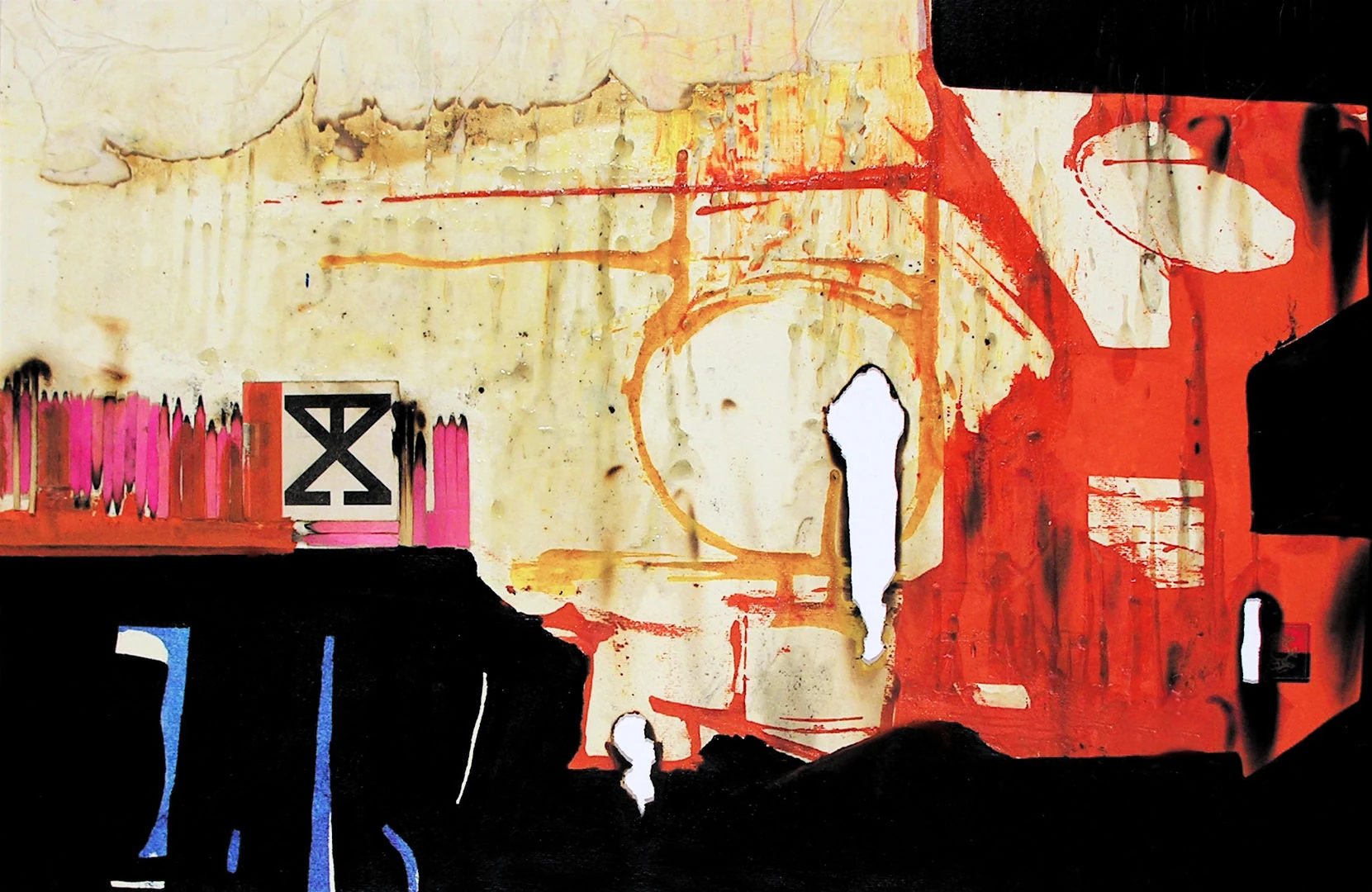
Paintings that were, to a certain extent, alarming from the perspective of social reflection
[“These were highly material-focused works created in the period preceding the intense social unrest of the seventies; through this work, I attempted to highlight a global system that was rapidly accelerating. Indeed, those years saw the rise of an economy that, advancing frenetically, led us to the ‘economic boom.’ Certain aspects of that period did not convince me at all, and I already foresaw that the emerging system was hardly conducive to a civilized way of life”];
with which he held his second solo exhibition in November of that same year at the Salone del Grand Hotel et du Parc in L’Aquila. The exhibition is introduced in the catalogue by the young Emidio Di Carlo, who, in an article for Il Messaggero, summarizes the artist’s approach: “the painter is driven by the most pressing issues drawn from current events—issues that are deeply felt and reinterpreted so they can be presented anew through a poetic vision aligned with the artist’s own sensibilities.”
He subsequently moved to Rome, as he was actually facing opposition in L’Aquila.
[“After some time—once the controversies surrounding the ‘Anti-Biennale’ had faded, and perhaps as a way to appease me—I was invited to participate in an edition of Alternative Attuali. Crispolti visited my studio on Via Tre Spighe in L’Aquila to select works for the exhibition, but a few days later he wrote to me with regret, explaining that he could no longer extend the invitation—at least not for that edition—due to a refusal by the organizers. Given my past protests, I wasn’t surprised, yet I felt deeply betrayed by the city; I decided to cut ties with L’Aquila for good and move to Rome.”],
From Rome and Milan to Pescara
although, after a while, Rome proved to be a city unwilling to promote artists who operated with complete transparency.
[“Rome in those years was a place of extraordinary beauty, yet it revealed itself to be a large, bourgeois provincial town where, to achieve any goal, one had to navigate certain ‘respectable’ social circles. I never yielded in that regard—not out of moral righteousness or provincialism, but simply because that kind of maneuvering was not part of who I was.”]
A few years later, as a result of this, he decided to move to Milan, where, conversely, he soon achieved significant success.
[«At first, I began visiting Milan intermittently, and doors immediately opened for me—interesting contacts; in short, I managed to quickly find a favorable foothold in the art world. In fact, after some time, I even had the opportunity to sign a three-year contract with a gallery»],
but after just a year, he realized that the environment in which he was working could prove to be a double-edged sword for his artistic exploration; reconsidering an invitation from Giuseppe Misticoni—with whom he had formed a connection during the prestigious 1967 Proposte Uno exhibition in Avezzano, where Visca had exhibited—to teach at the art high school Misticoni directed, he courageously decided to leave everything behind and move to Pescara.
[«With great determination and without a second thought, after a year I broke the contract that provided me with a steady income. At a moment of deep uncertainty about what to do with my life, I recalled Giuseppe Misticoni; ever since I had first moved to Rome, he had been persistently urging me to come and teach at his Art High School in Pescara. Teaching had never been part of my plans, but at that moment—determined to regain total creative freedom, far removed from the power dynamics of the market and art criticism, and fully aware that I was facing a challenging reality—I decided to move to Pescara to distance myself once and for all from the centre of things.
In Pescara, I was heartened by the warm welcome I received from Misticoni, as well as from Alfredo Del Greco, Elio Di Blasio, and many others»].
It is 1968
[«The era of protest was in full swing. The world was revealing serious flaws. Western society was showing clear systemic imbalances, yet the protests then underway no longer had the strength to overturn anything. In my view, simply holding up signs saying “no” no longer made sense; instead, it was necessary to propose alternative projects and challenge the system from within. Things had reached a point where whatever wasn’t working was so glaringly obvious that it exposed itself. Choices had to be made. Faced with that landscape—and fully aware that revolutions are never achieved through art—I firmly decided to step away from the power structure and begin fighting outside the confines of the trends that were already becoming the driving force behind the art market.
Even in the academic world—as the ferment of protest was steadily mounting—I swam against the current. While universities were handing out collective “political grades,” I—applying teaching methods based on “simulation games”—fought firmly to enhance my students’ individual capabilities, always respecting their intelligence and the freedom of their creative scope. I was convinced that to contend with a system that had become so powerful and entrenched, the only viable weapon was the expansion of one’s own knowledge and the ability to perform at the highest level of competence, thereby enabling one to put forward well-founded alternative proposals.
For this reason, too, in my work—never getting sidetracked by the vagaries of art trends—I have always devoted myself wholeheartedly to forging a personal language, regardless of surrounding events; I strove to define an “alphabet” that truly resonated with my own nature. I believe I succeeded, at least in part; while it may not be a monumental achievement, I view the ethics with which I embarked on my artistic journey as a positive thing. Above all, I believe my greatest merit lay in undertaking this path with humility and modesty, always aspiring to understand a little more than I had the moment before, and working constantly with the certainty of doubt—but, most importantly, far removed from the glitter of success.
I have always believed that the artist’s role cannot be that of a virtuoso seeking financial glory, but that of an individual who engages directly, through their own imagination, with the problems facing the world.
It is 1968, and in Pescara Visca effectively breaks with his earlier work, while retaining its incisive underlying principles and some stylistic features. He decisively adopts a magical, dreamlike language that he continues to develop to this day, also infusing it with indirect references to his own region.
[“When I returned to live in Abruzzo, I lost every opportunity to enter the places where decisions were made, but I regained a sense of belonging to my homeland, with its complex historical and cultural layers, which later provided ideas and reasons for my work. Choosing Pescara was certainly painful and difficult: it took me away from attractive opportunities and financial security. Yet I had always said that suicide could only be committed from the ninth floor, not from a height of fifty centimetres, as the world tried to persuade us. If you jump from the ninth floor you are certain to die; from fifty centimetres, in the worst case, you may end up limping for the rest of your life.
I always found that too sad; it was never part of me.”].
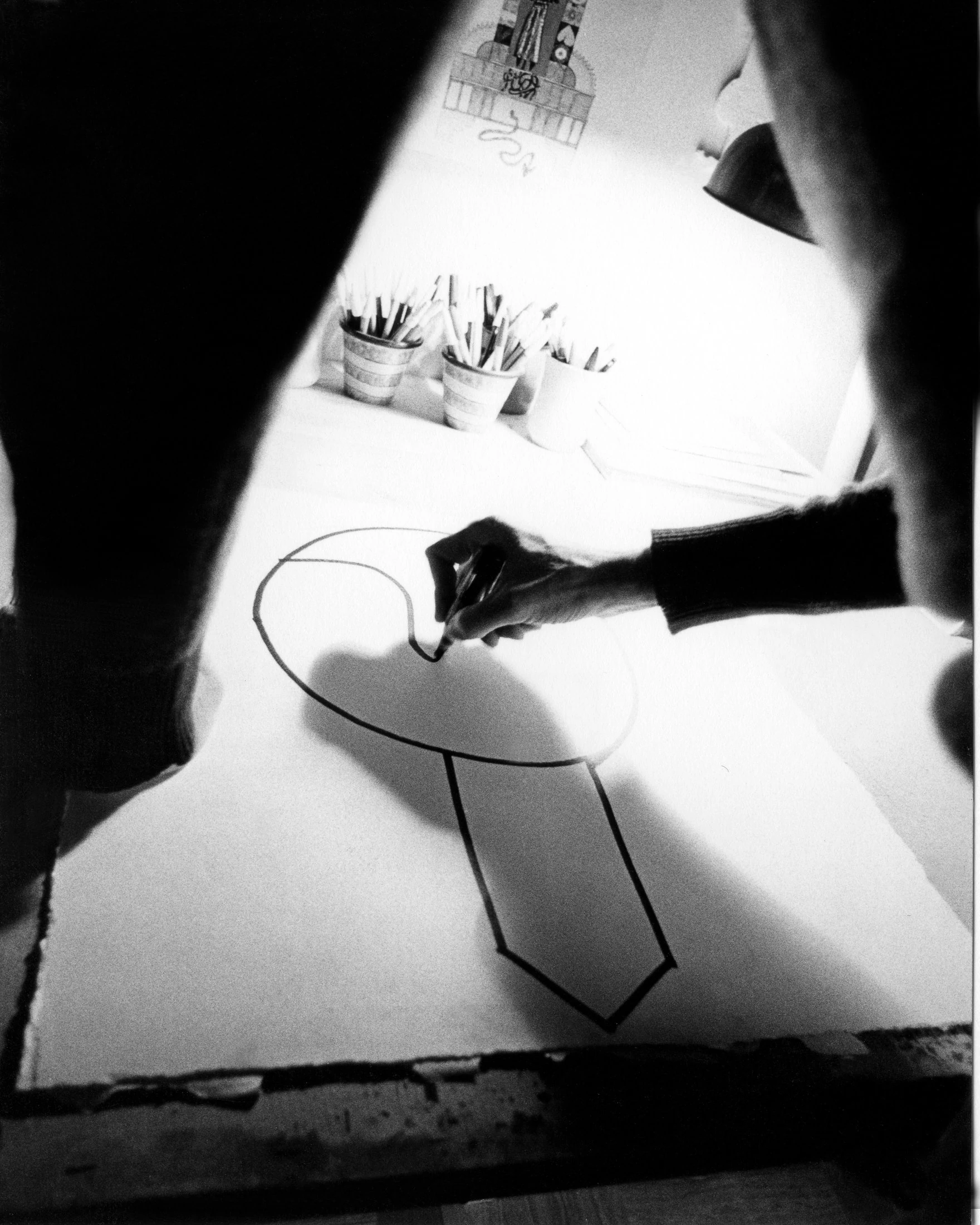
One of the first people he meets in Pescara is Antonio Bandera, who, as we have seen, is one of the curators of the Alternative attuali exhibitions
[“By then, after a period of official involvement in the art world, Bandera had for some time devoted himself exclusively to journalism for Rai’s third, cultural programme. He lived in Rome and came to Pescara each summer for a few months’ holiday. During his stays we began to see each other frequently. In the evenings we would usually sit at the Lido on the seafront with our friend Alfredo Del Greco, a respected artist of the 1960s, talking until dawn about art and the world. He held both my work and Del Greco’s in great esteem and, although he no longer practised the visual arts, he continued to offer us thoughtful attention and constructive advice.
With him I became convinced, more than I already was, that the choice to have left the centrality for the periphery had been the right thing to do. Often behind his loud laughter he told me that I was a real “crazy”, but that I had done the right thing at that moment in making my decisions”].
Burri, theatre and encounters
In 1969 the Teatro Stabile dell’Aquila entrusted him with a very demanding assignment: the creation of Alberto Burri’s sets for The Adventure of a Poor Christian by Ignazio Silone, directed by Valerio Zurlini
[«I was contacted by the T.S.A. because in Italy no stage engineering laboratory was available to create those scenes. It consisted of two plastic combustions, one white and the other red, and a bag. It was necessary to create three backdrops measuring ten meters in base and seven and a half meters in height in relation to three small sketches by Burri. I went to do the two combustions in Milan where the Theatre had reserved a large space for me in a pavilion at the Fair. To keep the commitment I made, I managed to complete the work by not sleeping for fifteen days in a row and working continuously day and night. I was twenty-five years old at the time and everything was possible.
Instead, I went to make the large bag in L’Aquila at the Teatro Comunale. I met Burri in San Miniato because the summer premiere of the show was scheduled in the small square of the city. I remember that there was a moment when a certain tension was created due to persistent rain which prevented the scenes from being mounted outdoors and so we had to wait two days for it to rain. In the meantime, Burri questioned me, wanted to know how I had created the work and asked me about the materials used. While I explained to him that the combustions had been done partly with the burner and partly pictorially, he showed a certain apprehension with his facial expressions and underlined to me in a worried voice that I should have used other colours that he used for his works instead of the nitrosynthetic paints.
It wasn’t easy to make him understand my technical choices and that such large backdrops would have been read from at least twenty meters away. However, I confess that I was a little anxious too, especially because I hadn’t yet been able to view the vertically mounted works, but deep down I was confident. Finally it stopped raining and late at night Zurlini asked me to have the scenes edited. Burri with his inseparable Nikon around his neck went to sit in the last row of the audience. Under the stage there was Zurlini with Giancarlo Giannini, Gianni Santuccio, the musician Zafred and the rest of the company. I reached Burri and when the red flame was hoisted onto the stage backdrop, the square resounded with thunderous applause from everyone.
Burri then went under the stage and, shielding himself, said that the applause should be addressed to the performer rather than to him, then together with Zurlini he complimented me, declaring all his satisfaction.”].
Thanks to this experience, a relationship was established with Burri beyond the professional sphere which brought them together several times, also discussing Visca’s work.
[«The friendship with Burri began in San Miniato and over time it became increasingly concrete also due to the passion we had for hunting. The first time I was invited to spend a week in his home-studio, above Casenove di Mucignano in Umbria, I met another Burri. Different from that misanthropic character everyone was talking about. He was very open with me and on his afternoons of rest, after returning from long hunting trips, he passionately told me about the period of his imprisonment in the Hereford camp in Texas, about his first paintings and about the difficulties he had found in the concentration camp in finding his first colours, especially the red ones.
He also told me, with a certain anger, about all the efforts and commitment he put into the search for his missing brother on the Don, in Russia, but above all we talked about painting, about his friends Colla, Ballocco and Capogrossi with whom he signed the manifesto of the «Origin Group» and also about my work. It was the period of “puppets” and I must say that he was quite surprised by those large rag sculptures of mine. After long and detailed considerations on art, he finally concluded by telling me that the most important thing for an artist is to follow only his own instinct, not caring about everything and everyone”].
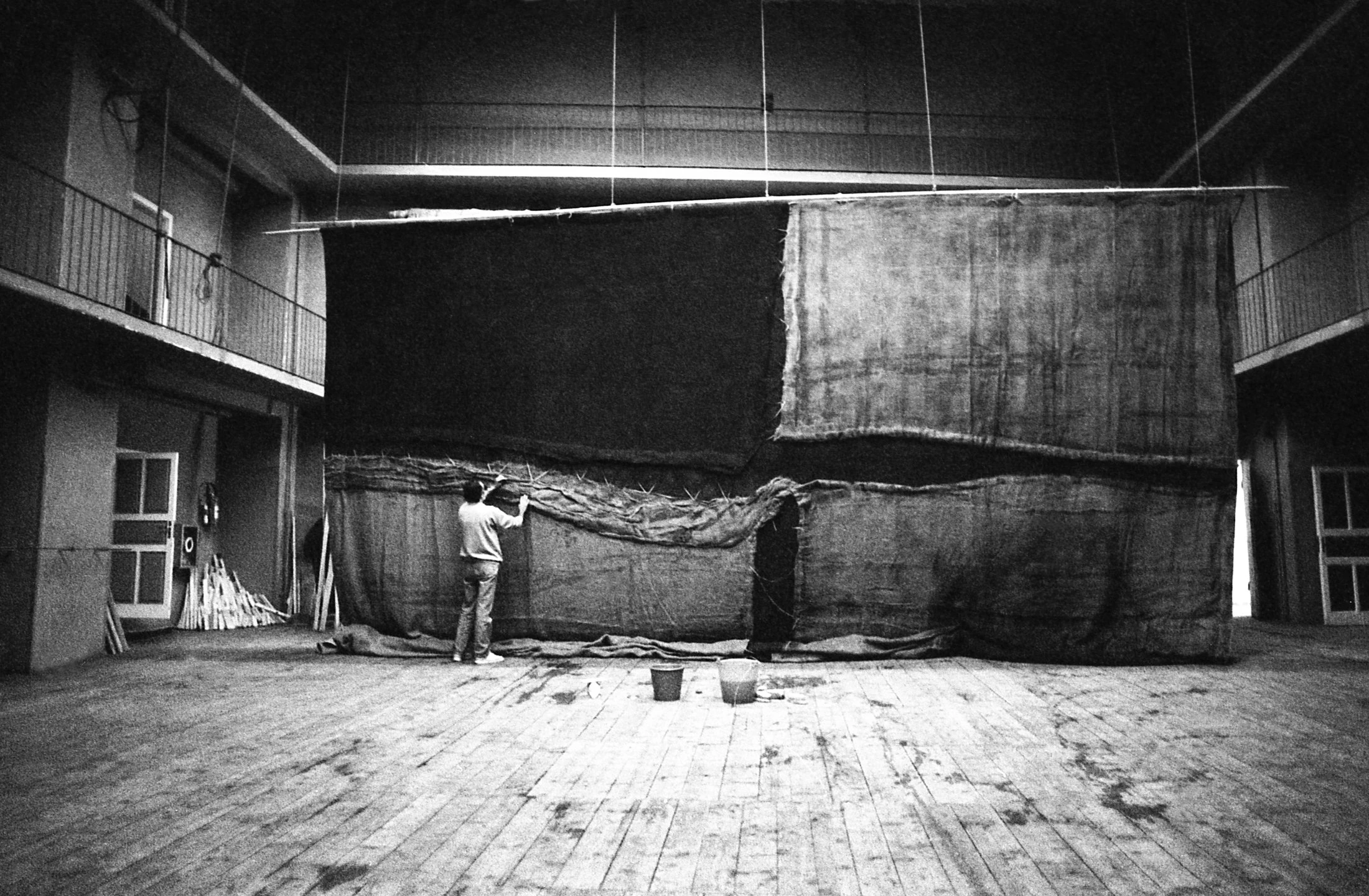
Visca continued to collaborate with the Teatro Stabile for a few years with frequent stays in L’Aquila, coming into contact with many of the artistic personalities who for various reasons frequented the city in those years.
[«In that period it was easy to find myself together with the Living Theatre Company of New York, with Stockhausen and Bruno Canino, with Carmelo Bene and Gino Marotta, Piera Degli Esposti, Vittorio Gasman, Andrea Cascella and the young Gigi Proietti. The city was experiencing an unrepeatable season of true cultural liveliness and was a place of continuous excellent attendance thanks to the T.S.A., the Società Aquilana concerts and the Academy of Fine Arts directed at the time by Piero Sadun. One evening, at the inauguration of one of my personal exhibitions at the Scalco delle Tre Marie by Paolo Scipioni (1974) where we gathered almost every evening, Carmelo Bene behind a deceitful smile said to me: this evening I will let you attend my show on stage with me!?
Despite the consummate friendship that bound us, I thought it was one of his usual provocations, but that same evening I actually found myself on stage with him immersed in Gino Marotta’s scenography, experiencing Our Lady of the Turks from life, as if I were an actor. In those years I think I experienced extraordinarily unrepeatable privileges in L’Aquila. Too bad it all ended very soon.”
The “pupazze” belong to this period, curious large three-dimensional figures covered in fabric (from this moment the sewing machine becomes a more than important tool for him), in which «there is, ultimately, a certain mockery of reality, dampened by the sadness of the real puppets, authentic devitalized Golems or silhouettes collapsed in a wax museum that is not sufficiently refrigerated» (Benito Sablone).
A wittily metaphorical discourse that connects the internal man with the external man, which in the early seventies he tackles on a more two-dimensional level, alternating the mix of various materials with the exclusive use of painting.
In 1971, for two years, he taught Figure Drawing with Andrea Pazienza, with whom he maintained a relationship of profound friendship until his tragic death in 1988. In 2006, the Fandango publishing house published the book Andrea Pazienza Visca, relating to Pazienza’s vast production centred on Visca, in which the latter declared: «Over time I almost always found myself a “victim” in his biting caricatures and in the development of the sarcastic stories he invented about me. However, I confess that I was always a little gratified by it, also because most of the drawings published in this book were made during my lessons or in my studio.”
And on a flap on the cover of the same book it is written: «With his thick black moustache, dazed look and flowing hair, victim rather than protagonist of surreal exploits, Visca suddenly finds himself catapulted into the imagination of the young Paz. The irreverent comedy, the precocious maturity of the sign and the linguistic experimentation make Visca fully included among the main characters of Andrea Pazienza’s extraordinary universe”.
It was 1973 when he met Gino Marotta, who at the time spent most of his time in L’Aquila where he taught at the Academy of Fine Arts, having the deconsecrated church of San Filippo as his studio.
They met through mutual friends who put them in contact because that year they were both invited to the Milan Triennale. Visca in the section The empty space of the habitat curated by Eduardo Vittoria
[«At that moment Gino was creating the artificial Paradise for the gardens of the Triennale, while in Pescara I was working on building a six-metre multi-material structure for the Italian Pavilion. Outside the gardens together with Marotta there was De Chirico with the reconstruction of his Mysterious Baths, I remember him sitting in the middle of his work as if it were one of his sculptures, and then Burri with the Teatro Continuo who greeted me quickly at the inauguration and ran away, and again Hundertwasser who I had met as an artist in an edition of L’Aquila’s Current Alternatives, Sebastian Matta with the work Autopocalipse. In short, 1973 was one of the most interesting editions of the Triennale.
When Gino Marotta learned of my invitation, he urged me to transfer my work from Pescara to L’Aquila to the church of San Filippo so that he could send it together with his sculptures to Milan. In fact, my structure was loaded together with the artificial Paradise onto a large truck which, with pink methacrylate rhinos, giraffes, flamingos and crocodiles, took on the appearance of an imaginary Noah’s Ark and coincidentally we left together for Milan under a torrential downpour. From that moment a true friendship was born between us which, supported by mutual professional esteem, has accompanied us to this day even beyond our history as artists”].
In fact, Marotta often follows him on mountain excursions
[«With me Gino discovered the mountains and despite his fears, he managed to keep up with me everywhere. On the Gran Sasso at the top of Corno Grande, in difficult high altitude crossings, in cross-country skiing and even in tough stays at the Forca Resuni refuge in the Abruzzo National Park. Since I was a boy I have been a fervent visitor to my mountains because in addition to experiencing the pleasure of discovering the places I passed through, I was able to escape the hustle and bustle of everyday life and immerse myself in the noise of silence. The relationship with the mountains was useful to me above all to become more introspective within myself, to overcome some hidden fears and also to remove some hidden uncertainties”].
The heart, the mountain and sewn works
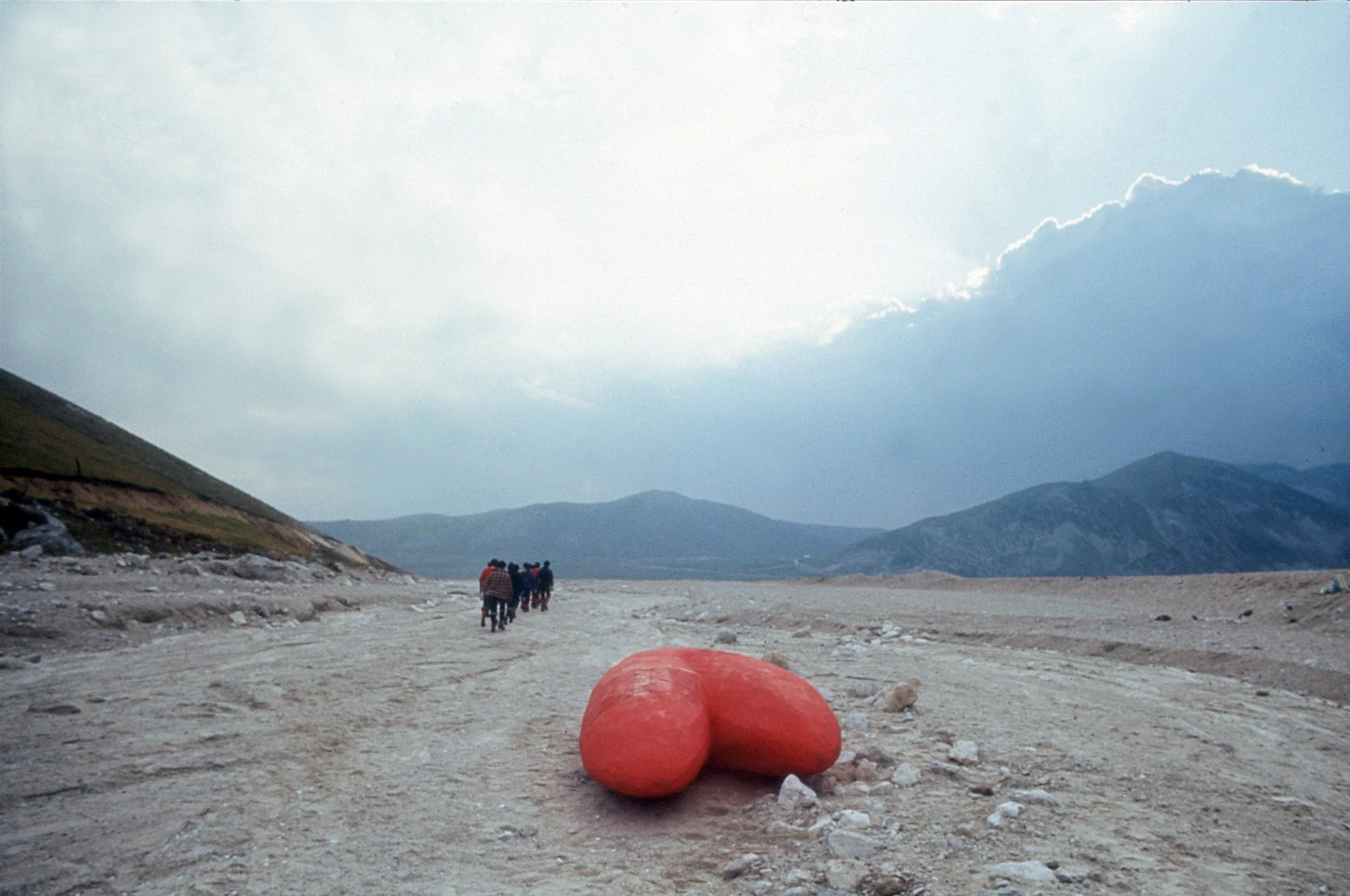
This is a passion for which Visca created the singular performative operation A red heart on the Gran Sasso in 1975
[«In 1970, climbing the highest peaks, the idea of a Red Heart on the Gran Sasso was sparked in my imagination. A kinetic work that I conceived as an attempt to mark a place as if to protect itself. The film was shot in 1975 on sixteen millimeter film for the promotion of the School of Dramatic Culture of L’Aquila and the technical collaboration of the Teatro Stabile. However, I owe the achievement of this undertaking above all to a group of Scapigliati friends, who, together with some well-known climbers from L’Aquila, managed to transport the large red heart (4x2x1 m) across Campo Imperatore and then hoist it onto the rocky walls of the Gran Sasso.
The action was not easy, indeed, in some moments it proved to be quite dangerous and the various technical difficulties encountered throughout the journey continually put the operator Fausto Giaccone and all the technical staff to the test. The film was able to be completed thanks to the organizational skills of Federico Fiorenza (now Director of the Teatro Stabile dell’Aquila) and above all due to the strong determination of the entire operational group who never gave up in the face of environmental adversities, in some cases very risky»].
The intrinsic motivations are briefly explained by the artist to Rita Centofanti in a 1986 interview: «the script is based on the recovery of the alchemical sense of the magic formula (that is, one thing, more one thing, more one thing, can give another thing, a result). I start from the alchemical element of the magic formula and build the action from there. In this case in relation to a series of complex reflections on the territory. And here, then, are the ingredients: the red bands, the slow and tiring walk, the rising heart, which remains exposed to the elements for three days and three nights, the descent back into the valley and the abandonment without ever looking back.
Ultimately it is an action without an apparent conclusion and which does not propose a solution. The attempt is to lay out an open mental system (in this case through a kinetic effect) in front of which everyone can elaborate, certainly behind a precise “drawing” of mine, the mysterious content of the work through their own thought and analysis”.
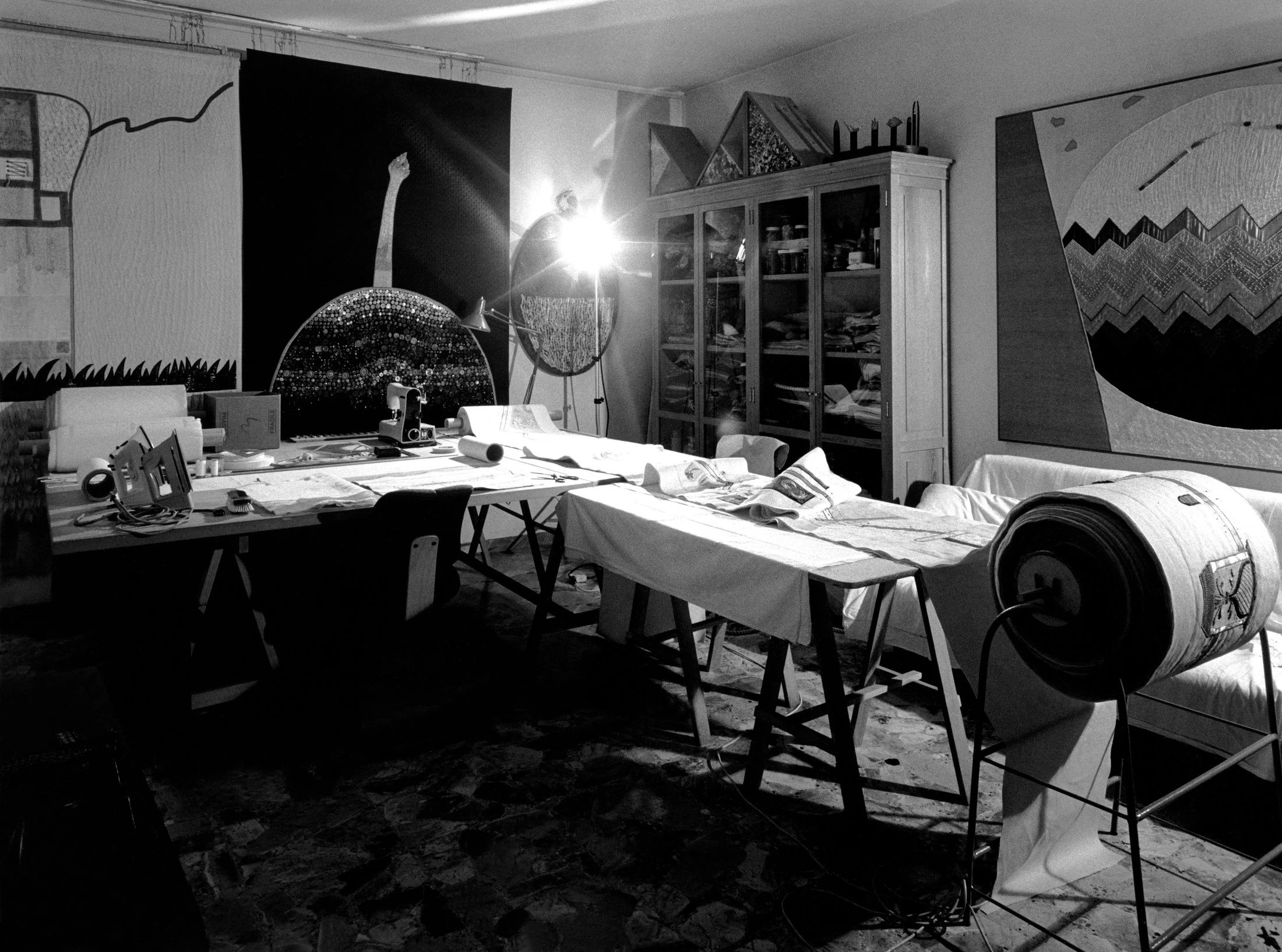
In 1974 Visca created his first sewn tapestry, with intentions of greater poetic exquisiteness, an operational choice that from that moment on he often recurs in his work, and in the decade to come, precisely in 1986, he held a solo show of tapestries only in L’Aquila
[«I made the first sewn tapestry in 1974 and exhibited it the same year in Pescara in a personal exhibition at the “Convergenze” Municipal Art Laboratory, of which I was a member, directed by Giuseppe D’Emilio. From that first experience I decided to dedicate myself to that type of work too and over the course of about ten years, given the industriousness of the execution, I managed to carry out almost twenty large and medium-sized ones without ever exhibiting them. The Gallo Cedrone publishing house, interested in this work, arranged to publish them in an elegant monograph, Cuciti, with texts by Enrico Crispolti and Tito Spini and for the occasion an exhibition was promoted at the Forte Spagnolo in L’Aquila»].
Crispolti points out in his writing, to avoid any misunderstanding, that «They are actually real fabric paintings, and certainly not decorative deductions». A question that often concerns Visca, but on which she now has a precise opinion
[«I don’t think that my work has any decorative aspects that someone notices from time to time. I understand that sometimes my excess in adding detail seems to lapse into decorum, but if you are more careful to evaluate the reference of the materials I use, you can notice that my intention, even in ciphering evident kitsch artefacts, is to insert sharp points of sarcasm and irony mixed in some cases also with the metaphor of the mockery and the malice of the laughable. The attempt is to put something saccharine and stupid into my works, as certain sad aspects of life appear to be. Ultimately it is an operation that tends to transmute everyday life where objects and situations, filtered through obvious irony, are metaphorically re-proposed in signs, simulacra and fetishes.
Of course, when the pictography of the materials I use appears more forced than usual, it is easy to misunderstand the intentions, but my “gymnastics” have always been aimed at punctuating a writing constantly poised between allusion and the objective relief of things in relation to the reality of the world. It’s a problem I’ve always struggled with, ever since the period of the first rag sculptures. I have always pursued challenges with myself to understand how far it is possible to twirl on a trapeze without having a protective net underneath. In my work I could certainly have taken a less risky path by aligning myself with the convenience of fashions, living more peacefully and facing less hardship, but easy things have never satisfied me, even when as a young man I frequented, taking risks, the harsh stony realities of the Gran Sasso”].
Travel and Il grande firmamento
1978 was a particular year for Visca, as he organized an expedition to South America which enriched him greatly internally.
[«Since I was a boy I have had an instinctive attraction to South America and in particular to Peru. I can’t say exactly why, perhaps due to the Latin culture that belongs to me, perhaps due to having perceived, after many readings, various analogies in relation to my land or perhaps due to the always dreamed of Andes. For years I had cultivated the desire to visit those distant lands until in 1978, having gathered all my energies, I decided to venture into those longed-for territories. For a year, before leaving, I tried to increase my knowledge as much as possible about Peru and its various profiles: socio-economic, historical-political, ethnic-anthropological and environmental.
Then I planned the expedition in all the technical aspects: equipment, clothing, photographic material, travel maps, study of the routes. It wasn’t easy to organize everything, also because in that period at the Peruvian Consulate I couldn’t find comfort from anyone. However, I was saved by the Italian Latin American Institute in Rome. President Carlos Fernandez Sessarego revealed himself as a good Peruvian to be an affable and courteous person and was deeply gratified by my true interest in his country. After giving me valuable advice, he had me photocopy some military maps which later became very useful to me.
I crossed Peru for a few months with the most disparate and adventurous means of transport, often on the backs of ramshackle pickup trucks together with the Indians, their animals and their merchandise, traveling along dirt cart tracks alongside thrilling ravines. Many times on foot, climbing over mountains of over four thousand metres, or with rather dilapidated makeshift vehicles. The only relatively comfortable means of transport was the train that goes from the Department of Cuzco to Puno on Lake Titicaca, crossing the Andes at an altitude of five thousand metres, the highest railway in the world. My Peruvian experience turned out to be deeply touching and ended happily (thanks also to the precious collaboration of Giancarlo Papini from Livorno who followed me throughout the journey) after having traveled up a stretch of the Amazon River from Iquitos, in the Peruvian Amazon forest.
In those places, a year later the director Werner Herzog made his masterpiece film Fitzcarraldo. Having lived in direct contact with the problems of the country, the campesinos and the Indians and after having seen first-hand the precarious socio-economic conditions of those territories, I realized how Che Guevara was a great poet and certainly not a great revolutionary. Abandoned by Castro and the Bolivian PCI, the hope of finding political consensus and help for an armed revolution from a people resigned to living within a rarefied reality was certainly unlikely. Crossing Peru I realized for the first time how much Western culture is responsible for having brought about a tragic and painful inequality between continents and how right Che Guevara had been in his guerrilla attempt, unfortunately with results that tragically failed his prediction.
This trip strengthened my ideas even more than I thought at the end of the sixties, basically that Western society should retreat from the path it had taken to reflect on social problems while avoiding evading the respectability of living in a large part of the world. The experience of this adventure further cemented my political position towards my work and above all my choices. I never thought that the world should stop, the world has the right to move forward as it has always been, but without erasing the dignity of ourselves. This could have happened if at the end of the last world war we had had a moral ethic to look back and understand where to remove the true codes with which to encrypt the mechanisms for a new platform on which to re-establish our existence.
Subsequently, other adventurous trips to Venezuela, where for thousands of kilometers I crossed the Gran Sabana by jeep from Canaima to Roraima until arriving in Brazil, the reconnaissance of almost all the oases of the Tunisian desert and other challenging journeys in distant territories, helped me to understand how many serious responsibilities we have towards the world. From the trip to Peru I brought back almost four thousand frames of which I learned, through a mutual friend, the American ethnologist-archaeologist Victor Von Hagen who had spent years in South America on the trail of the Incas. A Hemingway-like character, he lived on Lake Bracciano and when he found himself in front of my photographic material he proposed that I create a book with him.
I immediately accepted with enthusiasm, but due to the poor technology of those years and my delays due to work obligations, two years after the commitment I had made, unfortunately Von Hagen passed away and the book that I had laid out with so much care was never printed”].
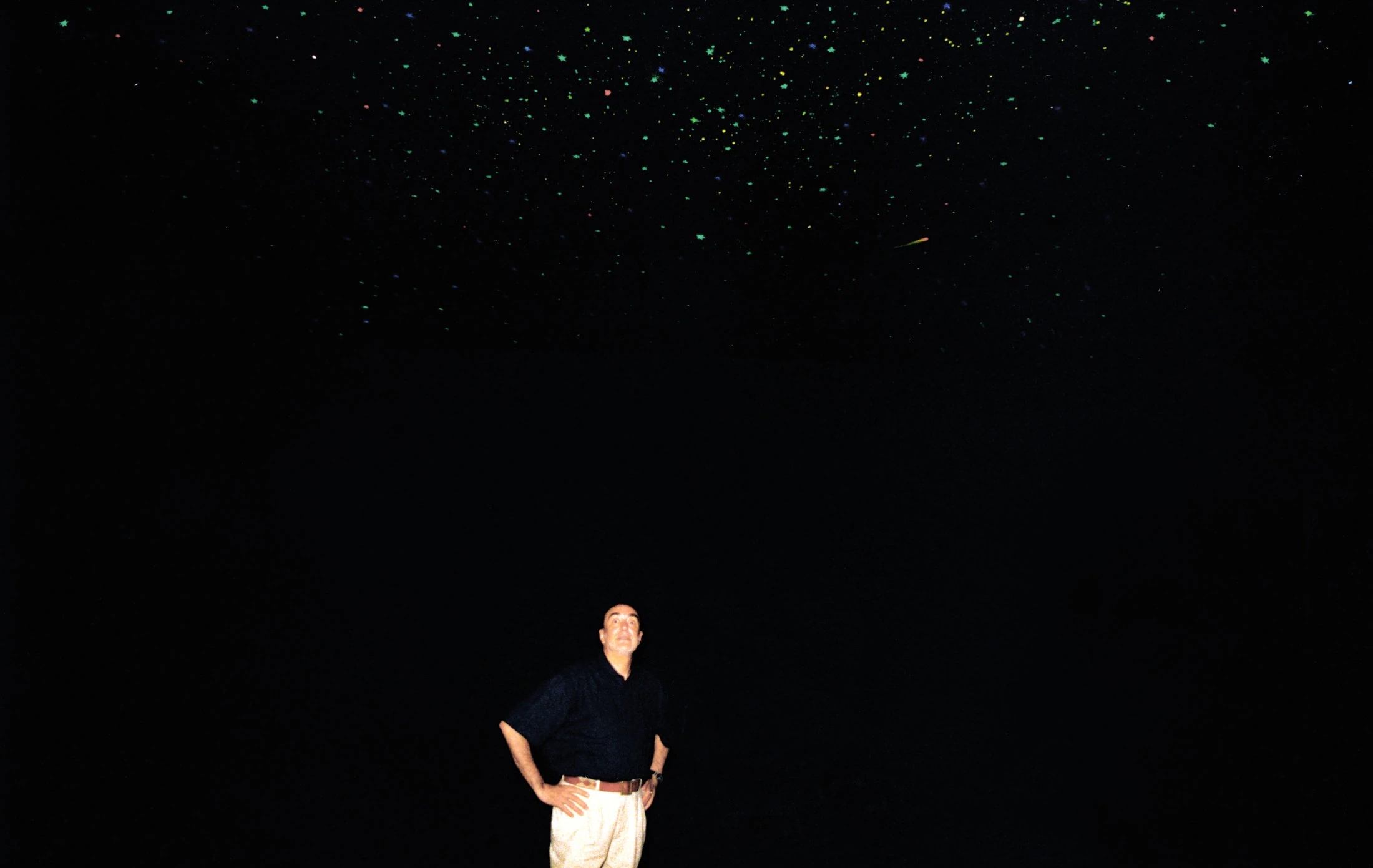
In the nineties and in this debut of the year 2000 he worked with more markedly objective intentions, with frequent forays into sculpture, also creating settings. One of these is The Great Firmament, exhibited at the Ex Gaslini in Pescara in 1995
[«Carlo Lizza, then President of the E.M.P., gave me the task of creating a work to be included in the program of summer events in Pescara, but urging me to perform something with a surprising content. I already had an idea for a work of this kind in my notes and so, after some studies and precautions, I defined the project for The Great Firmament. At that moment, a visit to my studio by Ruggero Pierantoni was stimulating, with whom I had the opportunity to evaluate my design choices and exchange opinions. The work consisted of the creation of a large room measuring ten meters by ten meters in base and ten meters in height preceded by a smaller entrance in front of the room.
However, for economic reasons it was later necessary to reduce the measures. The attempt was to disorientate the visitor by making him enter the large, completely darkened black box and force him, through a series of devices aimed at sensory disorientation, to turn his gaze upwards to look at the only visible thing, a starry sky. The sky in the darkness of the room was highlighted only because it was painted with fluorescent tempera and illuminated by black light (wooden lamps). The feeling of those who entered, remaining a prisoner of the darkness, was only one of strong uncertainty. Leaving an illuminated environment and immersing oneself in total darkness, losing the perception of space and also losing the sense of balance due to the floor inclined by various degrees, for the user of the game, the immediate need arose to seek orientation and find a point of reference so as not to get lost.
In this situation the only support remained the sky. Inside the large dark room, a further suggestive force was exerted by disjointed music by Karlheinz Stockhausen and Krzysztof Penderecki, which almost outlined the bright points of the sky. Having arranged all these elements, the challenge was to lead the visitor, through a series of unpredictabilities, to raise his gaze in the air and reflect how precarious, uncertain and small the reality we live in can be”].
In 1995 and 1996 he was involved in the creation of two large anthologies, in Camerino, at the Palazzo Ducale, and in L’Aquila, at the Experimental Museum of Contemporary Art; the catalogues of both are accompanied by a selected critical anthology. That of Camerino is presented by the scholar of neuroscience and cognitive psychology Ruggero Pierantoni, who acutely notes: «his routes, his maps, his graphic and plastic texts contain moments of discouragement, sudden sadness, atrocious and tiny details (Borges’ “minuscule ignominies”)».
Furthermore, as a true lover of cuisine, Visca wrote a book on Abruzzo cuisine in 1999, enjoying considerable success.
[«As a passionate and enthusiastic amateur chef I decided to write a book on my home cuisine, Abruzzi – The Art of Cooking, almost as if to provide a buttress to those consumer chefs supported only by the differentiation that the market requires. However, I declare very frankly that my knowledge on the subject is not intended to be of a scientific nature; I claim to my sole merit a true enthusiasm and a genuine passion towards, in my opinion, this not so minor form of art that the many friends for whom I cook can certainly attest and I hope that readers will derive from this book the same pleasure that I felt in writing it and as a painter in illustrating it”].
(Visca)
In itinere and new visions
From November 1998 to December 1999 he created a thirty-four meter long sewn tapestry where in a certain sense he unfolds all his imagination by encrypting the measurement of the Bayeux tapestry
[«In itinere it was a very singular job especially for the fact that I had never spent so much time and effort, the operational span of a year, to create a stitched work. The idea came to me while reading some ancient manuscripts on sheep tracks which in Abruzzo had a decisive importance in their socio-cultural and political articulations. From those readings I understood that the ancient wool routes began from one point and after an experience of territorial complications ended decidedly in another point, highlighting however that they were not just simple walkways, but profound slices of life. These ancient paths, containers of stories experienced and emphasized to this day by characters still alive despite their advanced age, led me to meditate carefully on a multitude of evident similarities with the strict measurement of our reality.
In fact, the In itinere tapestry begins its journey from the mystery of a sky and after an unwinding of thirty-four meters it ends in the mystery of another sky. The attempt was to indicate, through the narrow path crowded with events, how short, precarious and mysterious our little existence can be, even if told in the thirty-four meters of the work”].
In the last five years he has been working on the theme of “theatres”, mostly small-sized artefacts which «sometimes ironic and sarcastic, sometimes tragic, constitute the attempt to indicate how the current “landscape” we live in, in many respects already in ruins, is in various respects a seriously unstable and insecure composite» (Visca). And in this regard I argue in the catalogue of the latest solo show in Ofena: «Disturbing because behind the vibratile, iconic and material preciousness, precariousness and disturbance are often forcefully perceived: the architectural bodies collapse in the compositions, chaos imposes itself and those so easy joyful deductions lose a bit of their lightness, the figures sometimes appear captured in the instant of destruction.
But there is no dramatization in all this, but Visca seems to me to be taking a position that has never been expressed with such decisive clarity in the past.”
This in broad terms has been Visca’s journey so far, which with hindsight confirms and brings to extreme maturity his critical positions especially with respect to the current art system
[«After my choices and the harsh positions taken at the end of the sixties, there are few things I can be bitter about today. The only high price I paid in returning to Abruzzo, far from the market and the economy, was that I was only able to complete fifty percent of my design. This is a thorn that will prick me forever because in the life of an artist the most important thing is to materialize one’s ideas, everything that remains theory does not have much importance. However, the conflict between my internal being and my external life has always supported the reason for my work and has increasingly strengthened my belief over time that the “truth” does not exist, but it would be disastrous not to seek it.
With serenity I can say that today, after many years of activity carried out with passion and commitment, still feeling a lot of mental energy, I feel as if I were organizing the beginning of my journey. The role of the artist has certainly never been that of the revolutionary because it is certain that revolutions are made with weapons, but I think it has always been that of indicating a thought, an idea, a path to follow, a fracture. In my opinion, since the economy has become the balance of everything, even politics (which in the name of the institution attacks paintings, takes them down, dismantles, sets up…) modern art, unlike when it had it in the past, has unfortunately largely lost that function of filtering social problems and no longer has the role of a true proposition or true dissent.
Today the legitimation systems of art are blatantly evident. To create the value of an artist you need three fixed points. A critic who theorizes his point of view, a billionaire collector ready to buy at exorbitant prices and the director of a museum who encloses the official stamp. If these three steps are available it is possible to make anything important, then if you collude with politics you can get anywhere. Currently the art system is based above all on the idea of visual displacement. Nowadays the result is almost always repetitive and boring works that claim to hark back to that nihilistic revolution of Duschamp and Dada which certainly made sense in those times, but today I believe it no longer makes sense.
The neo-avant-gardes believe they have to amaze, I think there is no longer anyone to amaze and nothing to amaze about. Today I believe that the only stunning icons that can truly amaze are those produced by international television which broadcast tragic war scenarios represented by the torn bodies of nameless women, children and charred men. Art should be a little more knowledgeable, the real art of 20th century artists, coincidentally, has not yet gone out of fashion. Today, anything that suddenly becomes important is exiled into oblivion after some time to make room for new commercial ideas. In the sixties the situation of art changed and there was recognition of American culture throughout the world.
It was a very important change but at the same time it generated results that we have been able to see after the eighties and nineties up until today. An art that is just a product to sell rather than an artistic product. Just think of the history of the American abstract expressionists from Pollock to Calder up to Rothko, the last one who died. Despite their very high prices on the market, almost all of them committed suicide. They thought deeply about a different function of art, but their strong resistance to the standardization of the system never had any outcome. Today many artists who have enormous success and millions of prices produce works for an audience that understands little and is easily impressed.
The mass media court these artists for the shock they produce and major collectors no longer buy for the pleasure of taking possession of a work of content as once happened, but only for short-term speculation because prices are now rising dramatically very quickly. The powerful of art are cataloged by prestigious magazines as if they were racehorses and are ranked with “numbered bibs” or “knocked down” as if they were “crippled” and no longer recoverable, only to be replaced. Usually the committees that direct these rankings are composed of international consultants who are based on the artist’s financial success, career evolution and economic prestige achieved.
Most young artists today are aligned with the system, they are far from an ideal and have no other aim than that of protagonism and economic success. I think I belong to a marginalized minority that is certainly not projected into this optical cone and I am convinced that art is either freedom or it is nothing. In my opinion, in art quality is to be found within the work of an artist, not in the superficiality of success and fashions. When in 1968 I decided to get out of the mechanisms of market power, I certainly didn’t think that we would get to this situation today, but I certainly understood well where the art machine was headed and so I decided to get out of the yoke of oppression.
I had intuited the symptoms of what was about to happen, despite my twenty-five years and a bit of success in hand, with a certain perspicacity and if I could go back today I would certainly retrace the path taken. I want to tell my friends and all those who have misunderstood my isolation and my choices that I am an optimist who continues to hope for the same things. In short, I hope that the world realizes that we are all on a small spaceship and that it is better to sail away from that false reality which only manages to offer us the most cloying advertising page of success. We need to create an inner world and do without bureaucratic power which is nothing other than pure oppression.
The hope is to reclaim a creative capacity suited to living a modern reality closer to the values and needs of our human dimension”].